On Agents, Editors……And a New Cover!

coverWhen I completed my PhD in 1987 I thought I would never attempt another project that required as much attention to detail, hard work, and commitment. I was wrong. Writing My Heart Is Not My Own has required all of the above.
I’ve done my homework–four trips to Sierra Leone, phone calls and lengthy email conversations with anthropologists, experts on masks, experts on Mende dialect, road trips across the country, lengthy chats on the verandahs of African homes over poyo (palm wine) and beer–conversations about women, and men, and life and civil war. Hushed discussions about secret societies and yes, even clitoral circumcision–and that was just the ‘research’.
I’ve enjoyed two writing places–my desk overlooking the ocean off Victoria, British Columbia and my desk in ‘Room number 1′ at Florence’s and Franco’s Resort and

My Hemingway place in Sussex, Sierra Leone. Room no. 1 is behind the top three windows.

My Hemingway place in Sussex, Sierra Leone. Room no. 1 is behind the top three windows.

Restaurant on the beach in Sussex, Sierra Leone. I’m no Hemingway but ‘Room number 1′ is truly a Hemingway kind of place–beautiful view, a little fridge with wine and beer, paint peeling from plaster walls, a mosquito net and ceiling fan, shower that runs cold, fresh barracuda and lobster grilled over a charcoal flame. The property was ransacked by the rebels twice during the war and to this day the night time guard sits at the metal gate with an AK-47 across his lap. I love the place.

2012 visit, desk was in the middle of the room

2012 visit, desk was in the middle of the room

I didn’t have an ending in mind when I started writing MHINMO. What I thought was the beginning  became a series of scenes in the last chapters of Part One (more on that in a minute). I write best when I let my characters wander a bit–one day they’re taking me forward in time, and the next day they insist on taking me into backstory.view2

As I see it, my job is to stay out of the way and let the characters speak for themselves. They live in my head and are formed in my experience so they are never far away.
After four or five years I thought I had a novel so I pitched to agents in Canada, the U.S. and Great Britain. Most didn’t respond and those who did provided the ‘thanks but this doesn’t really suit my list’ response. Fair enough, agents receive hundreds of pitches, but pitching is the pits.

View from my desk in Victoria

View from my desk in Victoria

view1

View of the lagoon from just below my writing window…

I was on the island of Kauai when I sent a pitch to Drea Cohane of The Rights Factory. She responded immediately, asking for two chapters. My Heart Is Not My Own is written in first person with two point of view (POV) characters–a  Canadian doctor, John Rourke, and an African nurse/midwife, Mariama Lahai. I wanted Drea to read the beginning (Rourke’s POV) but I also wanted her to hear Mariama’s voice, so I sent a representative chapter of each. Drea responded the next day—“Please forward the entire manuscript at your earliest convenience.”

I knew Drea was different when she soon emailed to say she was almost finished the manuscript and would contact me in the coming week with her feedback. Feedback? This was new territory indeed and she didn’t disappoint. Drea thinks like an editor–she suggested I had an extra character or two and she thought the real beginning to my novel was a few chapters in. She politely asked if I was I open to edits? Yes Drea, I’m a blank page, an agent’s / editor’s dream–edits are no problem. Her suggestions were brilliant and she said she would be thrilled to represent the novel.

Writing desk in Victoria

Writing desk in Victoria

Within three months Drea had my novel in the hands of Penguin’s Adrienne Kerr, who was named by the Canadian Bookseller’s Association as Canadian Editor of the Year in 2011. One of Adrienne’s first comments to me was, “I couldn’t believe a man, let alone a white man, wrote this book!” Adrienne has been fabulous. She helped me to make sure that each character was fully formed and driving the narrative forward. Adrienne was also concerned that my working title was, in a word, forgettable. Adrienne, Drea, my wife Shelley (who has laboured through four years of drafts) and I had a conference call to discuss alternative titles. Shelley read a line from Mariama’s diary which described how Mariama would sometimes depersonalize to cope with her experience as a captive to rebel soldiers, “My heart is beating, but it is not my own.”

My Heart Is Not My Own, was the unanimous choice. Thank you Shelley, Drea and Adrienne!

coverhttps://mail-attachment.googleusercontent.com/attachment/u/0/?ui=2&ik=9e05d6fdc4&view=att&th=13a0502061696e7c&attid=0.1&disp=inline&realattid=9cf4f7832842f3cc_0.1.1&safe=1&zw&saduie=AG9B_P8gmCrTfusyH33_zEP8SQon&sadet=1348741645541&sads=Ac6CAaT7k5xMR2j-qt2xyIi6zlQ

Coming to a bookstore near you, August 6, 2013

Posted in Literata, Miscellaneous | Tagged , , , , , , | 7 Comments

India diary pt. 2: on love and marriage and the importance of caste…

Chinese fishing nets near Cochi, southern India

Chinese fishing nets near Cochi, southern India

Prior to coming to India, I’d thought I would blog about sights, sounds and smells. Frankly, I’ve seen, heard and smelled more in Africa and Cambodia, or maybe I’ve just become used to travel in places where there are too many people, too much garbage and too much corruption. It’s all here, as it is in so many places.

menmugging

Men mugging for my camera in Jaipur

What I hadn’t counted on was to become so obsessed with sense of place—not of physical place but of a who you are in relation to who everyone else is sense of place. In my last post I described our driver, Mr. Singh’s views on arranged marriage. He didn’t equivocate—he will arrange his daughter’s wedding and the lucky fellow will belong to the same caste.

I’ve since met P, a woman who helps to manage a hotel in the southern state of Kerala. P had a love-marriage and her views were not as I expected them to be.

Woman sweeping--our drivers could tell us a person's caste by seeing what they do

Woman sweeping–our drivers could tell us a person’s caste by seeing what they do

Unlike Mr. Singh’s home state of Rajasthan, Kerala has the laid-back charm of tropical places all over the world. It is a place of backwaters and fishing villages, and due to Portuguese influence, is home to India’s most concentrated Christian community. But it is India nevertheless—most marriages are still arranged  and Christians have caste groupings just like everyone else.

P married for love. She was from a lower caste Catholic family and she married into a higher caste Hindu family. Her mother, who she described as being her best friend, agreed to the union. Her future mother-in-law, who is a strong traditionalist, was a widow and her son was her only child. She agreed to the relationship as long as marriage was the outcome”.

couple2

Recently married couple posing for photographers and family members..

P didn’t have the lavish Indian wedding. Her groom didn’t arrive on a horse, or, in the southern tradition, a rented Rolls Royce or Mercedes: she and her groom were married in a civil ceremony with one witness. What P did get was a promotion to her husband’s caste. Despite this her father didn’t speak to her until she was in hospital having complications with the birth of her first child.

purple girl

Girl in purple, an ocean breeze…

In our month in India I often played a game of pointing out someone on the street and asking our driver if he could tell the person’s caste. We had several drivers and each one had no difficulty, especially if the person I pointed to was involved in some kind of work. People cleaning were from a different caste than people repairing a sidewalk. A tuk-tuk driver was from a different caste than a jeweler. P told me her mother-in-law still refuses to eat anything prepared by a lower caste woman. Her mother-in-law will eat a banana or orange in the home of someone from a lower caste—but nothing prepared by their hands. And there are all the inconveniences, even for P—like having to remain in a separate room and not touch anyone if it is her ‘time of the month’. And P still knows women who will cross to the other side of the street if someone of a lower caste is approaching.

Despite being younger and more sophisticated than Mr. Singh, P wouldn’t have it any other way. “Caste teaches morality and how to live—people from higher castes have higher expectations and so they are better,” she says. “It gives you a place in society, especially if you are of higher caste. I prefer it this way.”

girlhood

Young woman waiting for a motor-bike ride, Alleppey.


Posted in India Diary, Miscellaneous | Tagged , , , , , , , | 6 Comments

India diary–on love, marriage, and looking straight ahead…

tie-dyed fabrics, Jaipur

tie-dyed fabrics, Jaipur

After the ordered chaos of Hong Kong, India is the real deal: donkey-carts competing with Landcruisers, tuk-tuks and Toyotas. Dogs, cows and pigs rooting through garbage piled on street corners. Beggars camped under plastic sheets in roundabouts. Horn-honking dust-in-your-face mayhem.

woman in a rickshaw

woman in a rickshaw

In the morning light I stand on a street corner, shooting photos. The men look me in the eye, openly curious and mugging for my camera . The women look straight ahead, occasionally smiling but never losing the purpose in their stride. When I ask a

the men mugged for the camera

the men mugged for the camera

female employee at our hotel about this she says, “women must not linger. The young men will taunt us. Is it not this way where you live?” In Delhi at night there are few women on the street and none without the company of a man. I have never seen a city with so few women on the street after dark.

In the north, it’s easy to have the impression that men have a monopoly on gainful employment. Men take orders in the restaurants, work in the shops, take train tickets, drive most of the cars and motorbikes.  Men do the talking. If you ask a woman a question the closest man in any proximity will answer for her. A subtle form of taunting perhaps. I wonder how a woman in this country every became the head of government.

We hear the fireworks (literally) of weddings every rickshaw mannight. The groom arrives on a horse, or, if he is from a wealthy family, an elephant. In Jaipur we chance upon such a wedding. At the head of the procession are two elephants, several camels, a troop of horses and a huge uniformed marching band. Our driver, Mr. Singh, tells us that the groom’s family is making a statement to the bride’s. Horns blare wedding1and drums beat and the groom’s family, the men bedecked in pink turbans, dance happily as the parade winds it’s way toward the wedding pavilion. The groom is plump and baby-faced—after all the pomp and pageantry he seems rather camelweddingunderwhelming. Behind the whole procession is a silver carriage—hard to describe, really—think Cinderella between the pumpkin and midnight and you get the picture.  Mr. Singh assures us that the bride’s family will have staged an equally ostentatious welcome.

Within a block of the rich wedding we pass another wedding procession—a ‘band’ with only two drums, two horns and a scrawny nag of a horse. The groom, leaner and more capable looking than the rich groom, carries himself with the stoicism of one who accepts his lot. A handful of relatives dance in front of him.  “Lower caste,” Mr. Singh says, “no money.”

I’m struck by the contrasts and complexities of India. Bollywood videos play on every television channel and although I don’t understand Hindi the plots seem predictable—attractive, scantily clad but fickle girl rebuffs boy in tight pants and shiny red or blue shirt, dancing, singing, titillating until finally something ‘unexpected’ happens—they come together happily. It has been destined.

womentagThe fantasy is remarkable in a country where most marriages are arranged, the women wear beautiful clothing but would never dream of going out in the outfits the Bollywood stars wear. Still love is always in the air. The Taj Mahal, the most beautiful building I’ve ever seen, built by a king to symbolize his love for his favourite (third) wife. She died giving birth to their fourteenth child but she is remembered as perhaps no woman has ever been remembered.

women at fortWhat are the consequences of going against parent’s wishes and having a ‘love’ marriage? The stakes are high. Ironically, the young guide who took us to the Taj Mahal apologized for being distracted. He had a girlfriend, something which in itself is unusual here. A few days ago her family (of a lower caste) had kidnapped her and taken her away to Delhi where she was to be married to someone of the parents’ choosing. He told us she had _MG_9774called and told him she had been beaten for two days because she had not submitted to her parent’s wishes. We wondered why he didn’t just go to Delhi and kidnap her back—a very Eurocentric option it seems. He hadn’t thought of this. “But you must realize she could be killed or disfigured if I do this. It would bring shame to her family and they couldn’t just sit still and do nothing.”

upriver

Looking downriver from the Taj Mahal

I will leave the last word on this to Mr. Singh. He is of the second highest caste. He and his wife will arrange his daughter’s wedding. The groom will be of the same caste and the guests will also be of the same caste. She will not have seen the boy. If it were to be otherwise his family would never speak to him, as he does not speak to a nephew who married outside of his caste. I asked Mr. Singh if he thought India would be worse off, or better off, with no castes at all. He didn’t hesitate: “India would be better off with no castes—no question.”


Posted in India Diary, Miscellaneous | Tagged , , , , , , , , , | 2 Comments

The Next Big Thing

My writing place, on the beach, Sussex, Sierra Leone

My writing place, on the beach, Sussex, Sierra Leone

Recently, Helen McClory of Shietree tagged me in The Next Big Thing that is going around the blogs. Helen’s prose and photos are so consistently lovely I read every one of her posts. My answers pertain to my upcoming novel, My Heart is Not My Own.

Where did the idea come from for the book?

A trip to Freetown Sierra Leone in 2,000. I was in a refugee camp for civilian amputees. The idea came from looking into the eyes of a young woman. Her eyes live with me.

What genre is the book?

Literary/commercial fiction

What actors would you choose to play the part of your characters in a movie rendition?

An easy question: Halle Berry for the role of Mariama Lahai. Dan Stevens (Mathew, in Downton Abbey) as John Rourke. Either one of President Obama’s daughters as the little girl, Kabande…

What is the one-sentence synopsis of your book?

I’ve never understood the one sentence synopsis thing–and I’m the worst at it, so stop reading after one sentence if you must.

Haunted by the trauma of events during Sierra Leone’s brutal civil war, a Canadian physician, Dr. John Rourke realizes that before he can commit to his future, he must confront his conscience and the pain of his past. After receiving a package containing the diary of his ex-lover, Mariama Lahai, he embarks on an odyssey that takes him into Mariama’s world of a child soldiers, bush-wives and African secret societies. It is a story of love, courage and resilience that is brought to life by the powerful voice of Mariama Lahai.

How long did it take you to write the first draft of the manuscript?

I’m an editaholic so it’s hard to know whether I’m on my first draft or fifteenth. Probably two years for a ‘first’ and two years of rewrites.

Who or what inspired you to write this book?

In general terms, the women of Sierra Leone. It is difficult to conceive of an entire nation of women suffering through such a holocaust. I’ve journeyed across Sierra Leone three times to create the story of Mariama’s trek as a bushwife, and Rourke’s quest to find her.

Will your book be self-published or represented by a publisher?

It will be published by Penguin Canada in August, 2013.

Posted in Miscellaneous | Tagged , , , , , , , , , | Leave a comment

2012–a book deal, a new school, and dancing with the Mende

2012 was quite a year.

Napali Coast, Kauai

Napali Coast, Kauai

We spent February in one of my favourite places—the island of Kauai. Four weeks of family visits and homemade ahi poke, countless waterfalls and all-day double rainbows. I had started pitching to agents and it was from Kauai that I began a conversation, via email, with Drea Cohane of The Rights Factory. When Drea offered to represent my novel I didn’t hesitate. By mid-summer we had an offer for world rights in English from my soon-to-be editor, Adrienne Kerr, of Penguin Canada. As the year comes to a close, we’ve been working on edits, a cover and new title (more on that later) and we look forward to a summer 2013 publication date.

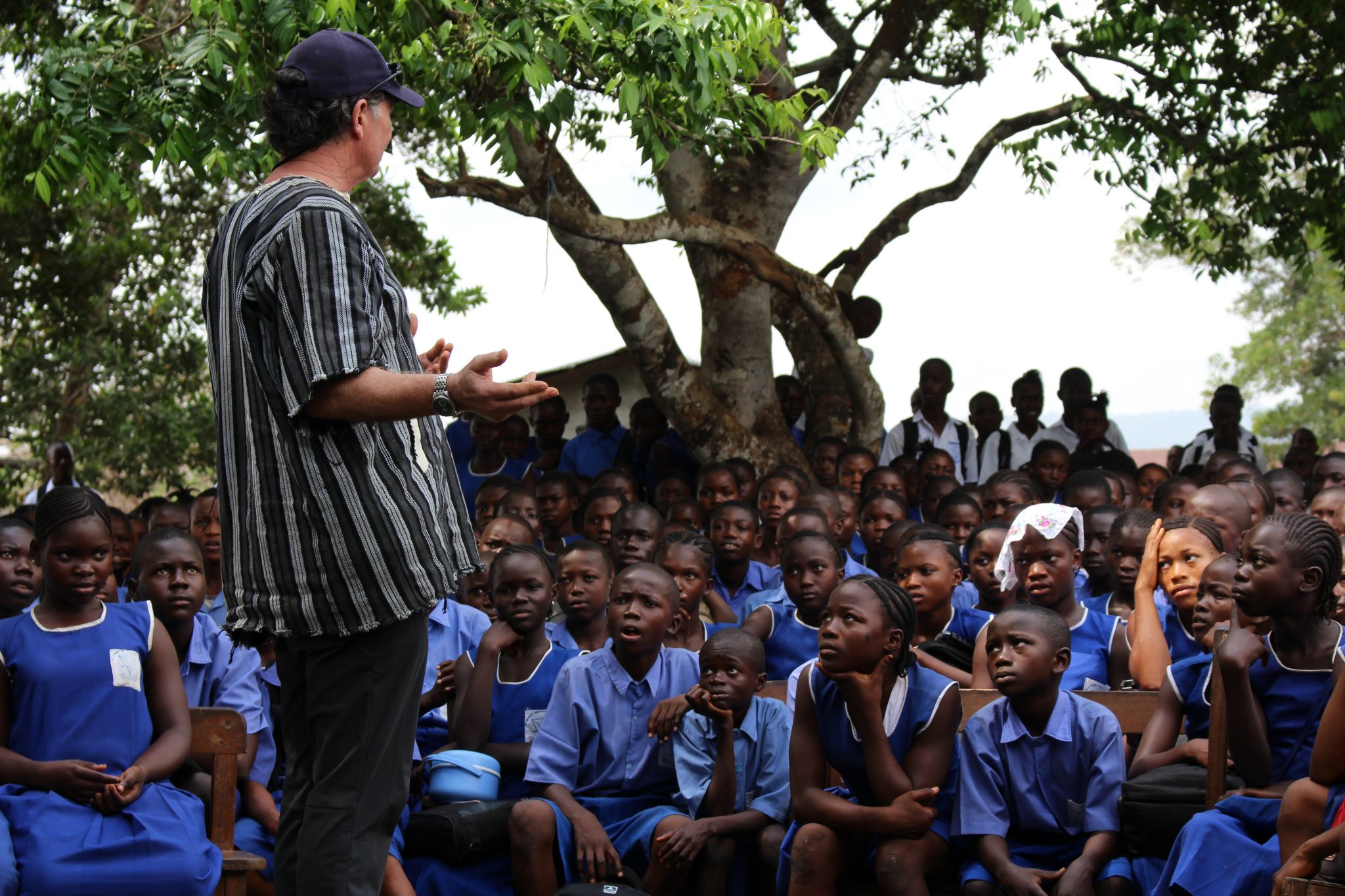
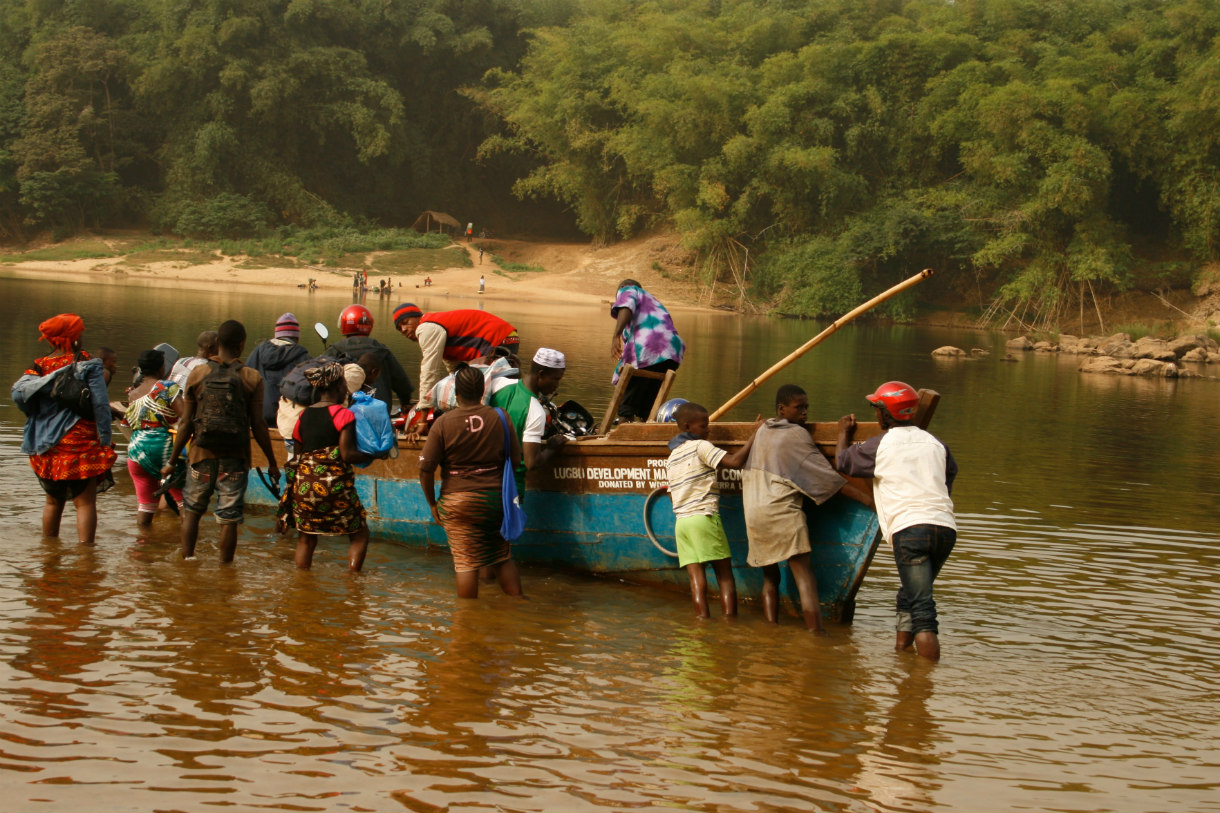
Thanks to contributions from family and friends we were able to complete the reconstruction of a new school and commence a bursary for 70 girls in Lugbu Chiefdom, Sierra Leone. These projects and some tweaking of my manuscript were the reasons for my return to Sumbuya this September.

The school and bursary program has been a couple years in the making. During my first visit to Sumbuya, I visited the mission school. Ninety-five children and two teachers to a classroom. Teachers walking around with cane switches—‘better to keep order’ they said. Very Charles Dickens. The kids with ‘no potential’ sat at the back like so many little statues collecting dust. Girls whose parents can’t afford school fees don’t attend at all.

Just up the hill was the shell of a school—roofless, broken walls. For ten years it stood abandoned. Some said it was a storm. Some said the war. Like so much in Sierra Leone thebw school ruin seemed to represent the good idea of an earlier time. Asking why the Catholic Mission hadn’t provided funds to rebuild the school was like asking why plagues happen: God’s will.

We had some meetings—if we rebuilt the school the average class size could be reduced from 90+ to 45 students. And so we did. I promised a percentage of the costs with funds raised through friends and family. The

Ruined school

Ruined school

local World Vision promised a percentage, as did the chiefs. The church (it was a Catholic mission school after all) didn’t promise anything. As to school fees, we established a ‘bursary committee’ to chose motivated girls and boys—if they attended regularly we would pay their way through high school. Oh, and the headmasters added one criteria for girls—they were not to get pregnant…

I had a commitment from my friend David Stephens to oversee both the building project and the bursary project. The school was completed the week before my arrival.

The New School, on time, below budget

The New School, on time, below budget

Within an hour of my arrival some of the local teachers and elders took me to see the new school. Three classrooms and a large hall that can be used for community events and extra classroom space. The official opening was a day later. Elders. Chiefs. Big men. Big women. Two hours of speeches. Platters of rice and spicy goat soup and chicken cassava. Many thanks. One of the chiefs was the last to speak—this could not have been possible without the chiefs, he said. Didn’t the chiefs give permission for Mr. Michael to come to the town? Didn’t the paramount chief write the ‘official’ letter to the mission asking for the project to take place? He neglected to say that the chiefs had promised 7% of the costs. They didn’t give a penny. Sierra Leone.

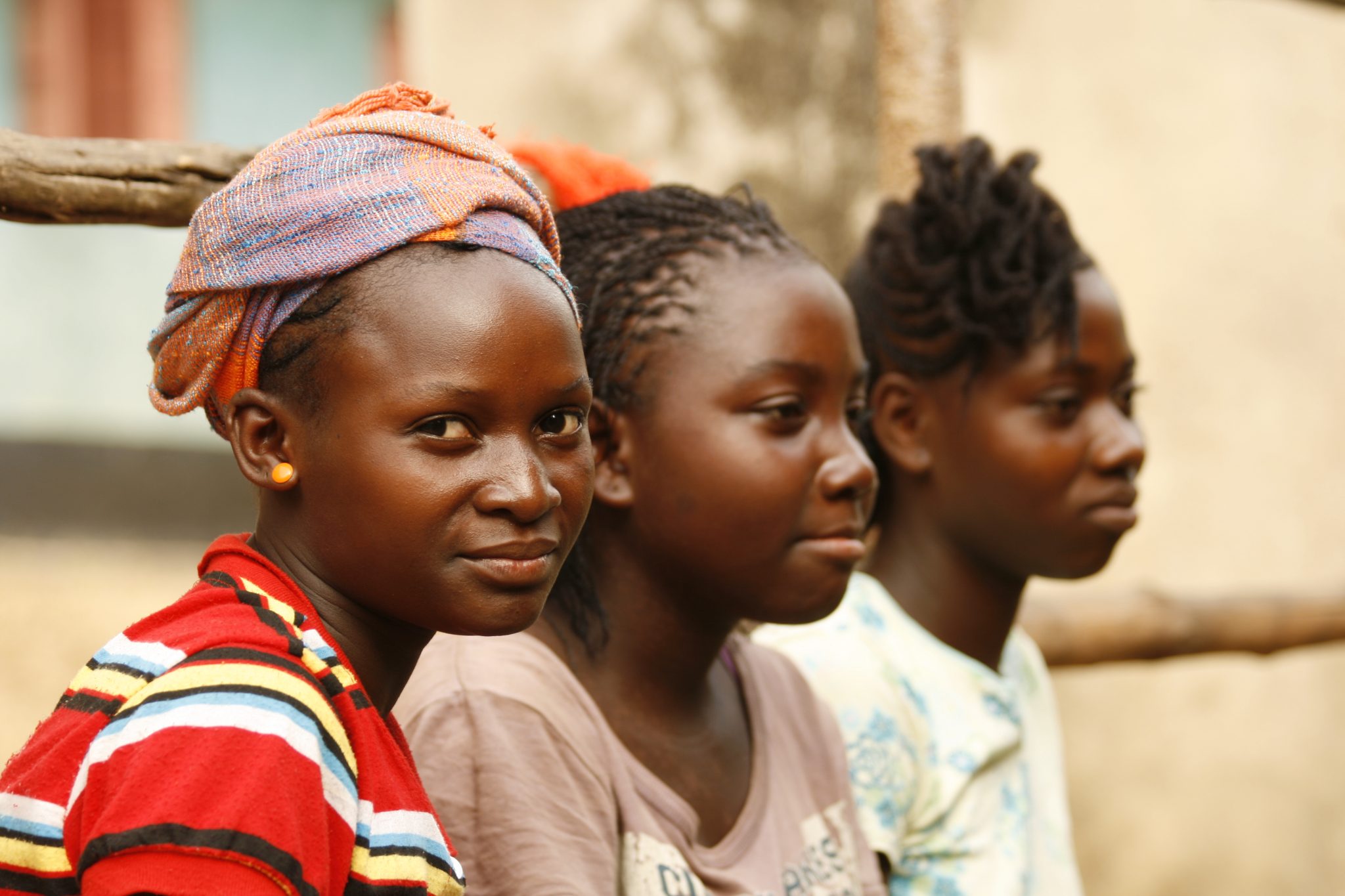
That night we had a dance in the hall to celebrate. Earlier in the day the girls we look after gave me a dancing lesson—sort of a Mende shuffle, nothing like the sensuous Bundu dances they’d performed earlier.

Some of the girls, and boys, in the bursary program

Some of the girls, and boys, in the bursary program

The girls dressed in their best and off we went. A generator provided the power for the big speakers. The only light was from the ambient glow of cooking fires in the courtyard and a couple of strands of Christmas lights around the stage. It was going well. Twelve year old Mamie said, “Mr. Michael you are a good dancer.” Just what I needed to hear—until the headmaster called a stop to the dance. “Clear the dance floor” he boomed into a megaphone. It all felt very ominous. Everyone started looking at me—my worst fears were confirmed: he wanted me to ‘open’ the dance.

the girls, and Saibu, dressed for the dance..

the girls, and Saibu, dressed for the dance..

“He wants me to dance alone?” I asked Regina, the only female teacher.

“Mr. Michael, it means you must dance by yourself in the middle to mark the official opening of the school….”

Something I should disclose right now—I enjoy traveling in places that could make a French Foreign Legionnaire tremble—but don’t ask me to be the first up on a dance floor. The best time to dance at a wedding is when the bride has had too much to drink and the guests can’t keep their eyes off her. I have poor rhythm, even by white-male standards. And this is Africa! People here are born dancing.

The headmaster signaled the dj with a flourish of the megaphone—let the music begin! I looked skeptically at Regina—“It is okay. I will join you,” she said with a reassuring smile. In my experience there is nothing a woman hates more than the look of terror in a middle-aged males eyes.

And so it is that in 2013 I danced for an African village. As my feet shuffled and I executed a few flawless twirls the girls again joined in, literally dancing circles around me. It was the sort of out-of-body experience that leads one to wonder what one’s family would think if they saw me at that moment. Collectively, they would have closed their eyes, shaken their heads and said: “Oh…My…Gawddd….”

Posted in Miscellaneous | Tagged , , , , , | Leave a comment

Taking the back way through Sierra Leone

The only vehicles on the roads belong to police, or the military or politicians….and our two-tone yellow taxi….

I hadn’t counted on National Cleanup Day. A country with no garbage pickup—no recycling. On windy days plastic bags swirl like leaves. But not on National Cleanup Day. The only vehicles on the roads belong to police, or the military or politicians. Everyone else is ordered to remain at home, sweeping one’s compound of trash. Risk driving anywhere and be subject to a tongue-lashing and a fine.

“We need to get to Sumbuya—the opening of the new school,” I say to my driver, Momodu.

“Ah, no problem Mr. Michael, we take di back way.”

There’s a back way across Sierra Leone? The front way is rough enough….

“What about roadblocks?”

“Leave it to me,” he says, “I have a plan.”

We head out in our two-tone yellow taxi—front-end noises, bald tires, as much dust inside as out. The back way. South, past River Two Beach and Tokeh, the jungle and bush broken by glimpses of beach and surf. Random men with machetes in one hand—jugs of poyo (palm wine) in the other. I smile, trying not to look at the machetes. We keep moving.

Random men with machetes in one hand….

Single lane bridges over torrential streams. Potholes like small lakes—caramel coloured water. If Momodu were to stall in one of these holes we would have a long wait—I’ve never seen a tow truck in Sierra Leone.

Momodu stops the car on a single-lane bridge, his finger pointing to the chasm below. “Seventy-eight died here during the war,” he says.

“The rebels?” I ask.

“Just a crash,” he says. “Di bus fall off di bridge.” He could have been saying the stock market fell by a point.

Potholes like small lakes—caramel coloured water

We hit the first police checkpoint somewhere close to York—a tatty rope strung like a limp noodle across the road. One end disappears in a palapa hut–the police station. Pouring rain. Momodu idles the engine and the windshield wipers slap in time, one speed, too slow for the downpour. We wait—I reassure myself that Momodu has a ‘plan’. The rope, held by a faceless hand, drops into mud. Momodu smiles. We drive on.

“That was easy,” I say.

“The police are lazy,” says Momodu, “they no want to get wet.”

We reach Waterloo at 11:30 am—thirty minutes to go in National Cleanup Day. It’s raining but this is the main highway, the police are out in force. Ten of them at a roadblock, handing out fines, yelling at drivers—“Have you no pride? Are you better than the rest of us? Driving when you should be cleaning?” My eyes find irony in the open sewer beside the road–driving when we should be cleaning…

A policeman approaches—even his baton looks angry. I put my camera down. Momodu points at me and in a too-loud voice tells the cop I am an important man. We can’t be late for the opening of the new school I have helped to build! Ahh. Momodu’s plan is revealed—I am an important man. He doesn’t say BIG MAN, but that is the inference. I am a white man with no compound to clean.

The cop is hearing none of it. His voice rises to a scream, his baton tapping menacingly on the hood of our little yellow taxi. A crowd gathers.

I hold up my hands in surrender. “No problem,” I say. My voice is a sheepish squeek. “We’ll wait here. No more driving.”

a medical officer, a lieutenant, going to his auntie’s funeral.

That’s when another uniform stops beside my window, blocking the sun. Sierra Leonean Army. Officer stripes. They enforce the sweeping of dirt with the army? I look to Momodu. He shrugs as if to say, ‘better get out your wallet’. I hear a tapping on the window–not a baton, knuckles. I look up—the face attached to the uniform is smiling! He introduces himself—he’s a medical officer, a lieutenant, going to his auntie’s funeral. Could he hitch a ride with us? I find the sound of a man in uniform saying the word ‘auntie’ strangely reassuring. Momodu senses an opportunity—he asks the officer to take my seat in the front of the car. Who am I to argue?

The policemen stare—probably calculating the size of the “fine” they’ve just lost. The cop with the baton shrugs as if to say, ‘we’ll catch you next time.’ The barricade lifts. The police wave us through, smiles all around. Later, the kind lieutenant suggests a stop for some poyo along the side of the road. I have a glass, he has four–I buy him the jug, ‘for your auntie’ I say.

the kind lieutenant suggests a stop for some poyo along the side of the road.

We spend the night in Bo and head south at first light. The road to Sumbuya in the dry season is all bumps and dust–the rainy season is something else entirely. The track is mushy goo–Momodu tells me not to worry, he can drive anywhere. Within 20 minutes we’re stuck. Solid. Men gather–they regard me with curiosity–white men travel in gleemy four-wheel drives–what was I thinking?

Within 20 minutes we’re stuck. Solid. Men gather….

Sinking to mid-calf in the mud, our good Samaritans throw branches and stones under our wheels. Their efforts under the mid-day sun are heroic. The yellow taxi grunts and grinds and farts brown muck and, defying all laws of physics and gravity and slippery-do, we emerge.

Momodu smiles, “See, I tell you Mr. Michael, I can drive on any road!”

The track to Sumbuya, which takes an hour and a half in dry season, takes five hours. Despite the challenges, I love the drive. Along the way we meet women and girls doing laundry–their smiles and laughter are as vibrant as the palette of green that surrounds them.

their smiles and laughter are as vibrant as the palette of green that surrounds them.

We limp into Sumbuya with front-end noises that have even Momodu concerned. He mutters something about needing a mechanic. As the girls Lucia, Mamie and Maserai run toward me I smile and give the old yellow taxi an affectionate kick. I wouldn’t have missed the back way across Sierra Leone for the world.

Posted in Miscellaneous, Salone 2012 | Tagged , , , , , , , , , | 2 Comments

A few days among the Mende in Sierra Leone

This is a “live” post from Sumbuya, Sierra Leone. I ask your forgiveness for spelling or grammatical errors—I’m in an NGO office, the lights are blinking and, well—this is going to be one draft only.

I’m here to tidy up loose ends. Tomorrow I’ll attend the opening of the school that our family and friends have assisted in rebuilding –more on that in the next post. I’m also here to finish editing My Heart Is Not My Own—three days on the beach south of Freetown should do the trick.

Now to what I’ve been up to the last few days.

Hona Mahei (witch-doctor) gesturing while describing his snake-bite cure

The witch doctor didn’t disappoint. He is an engaging gentleman and is arranging for the goboi (bush devil) to dance for us tomorrow. The house that he shares with his two wives and eight children was everything I expected: walls covered in prayers, blotches of something that looked like one part mud, one part wasps nest, a hatchet over the bed, and a roof from which several items were suspended—none of which I recognized.

In short, it was a place befitting a witch-doctor/traditional herbalist. He cures snake-bites (the bite of a cobra is the worst), fixes problems involving the heart and stomach, and casts out wizards that have possessed children. For this he has a rope which is tied around the neck and waist of the afflicted child. The cure apparently never fails.

Having the girls from our compound dance for me has been one of the most enjoyable experiences I’ve had in four trips to Sierra Leone. Of course I videoed the dances and showed them in the evening on my computer—this has led to more dancing and tonight one of the girls from the Fula family next door has asked if she can dance.

girls preparing with white body paint

One the first night the girls dressed normally. Their dances were wild, sensual, and seductive. As Madame Yeamah explained these are the Bondo dances that are performed during the Bundu initiation. The girls are ten to twelve and have been dancing for a couple of years.

On the second night the girls painted their faces and bodies white, as they do during the Bundu ceremony. They danced their hearts out and I could easily imagine them moving, trancelike until they dropped, on the day of the Bundu initiation.

I was the only man present and it was like the girls, and watching women, welcomed me and then forgot I was among them. Although I heard my name in some of their songs (“greetings,” they said with giggles all around) they mostly danced for themselves—as Madame Yeamah says, “the Bundu is for us, the women.”

I felt privileged.

Posted in Salone 2012 | Tagged , , , , , , , , , , , | 2 Comments

Press Release about My Heart Is Not My Own

https://mail-attachment.googleusercontent.com/attachment/u/0/?ui=2&ik=9e05d6fdc4&view=att&th=13a0502061696e7c&attid=0.1&disp=inline&realattid=9cf4f7832842f3cc_0.1.1&safe=1&zw&saduie=AG9B_P8gmCrTfusyH33_zEP8SQon&sadet=1348741645541&sads=Ac6CAaT7k5xMR2j-qt2xyIi6zlQ

Penguin Canada to publish My Heart Is Not My Own

September 26, 2012 (Toronto) – Penguin Canada is thrilled to announce the acquisition of Michael Wuitchik’s compelling novel, My Heart Is Not My Own (previously Three Stone Fire), set to publish in Summer 2013. The book was acquired in a competitive bid by Penguin’s Commissioning Editor Adrienne Kerr and arranged by Drea Cohane of The Rights Factory in Toronto.

Dr. John Rourke is finding it difficult to forget his days as a relief doctor in West Africa. In the 1990s he travelled to Sierra Leone, in the midst of a civil war, to offer medical attention and supplies to the victims of that conflict. He befriended a local nurse named Mariama and a doctor named Momodu, but lost contact when the conflict escalated to conflagration. His last memory of Sierra Leone is of Mariama on the floor of a bombed hospital room, delivering a mutilated mother of a beautiful baby while NGO personnel usher him into the safety of a waiting helicopter.

Now living in Vancouver, happily married to Nadia who is expecting their first child, John is thrust back into the horrors of the past by the arrival of a package from Sierra Leone. Haunted by trauma, John realizes that before he can commit to his future, he’ll have to confront his conscience and the pain of his past.

Kerr says, “My Heart Is Not My Own” is a debut novel that bears witness to extraordinary levels of suffering; that explores what our responsibilities are to each other. It’s a novel about separation and connectedness, and about how respect for tradition can save us from brutality. We are extremely proud to be publishing this beautiful, harrowing novel.”

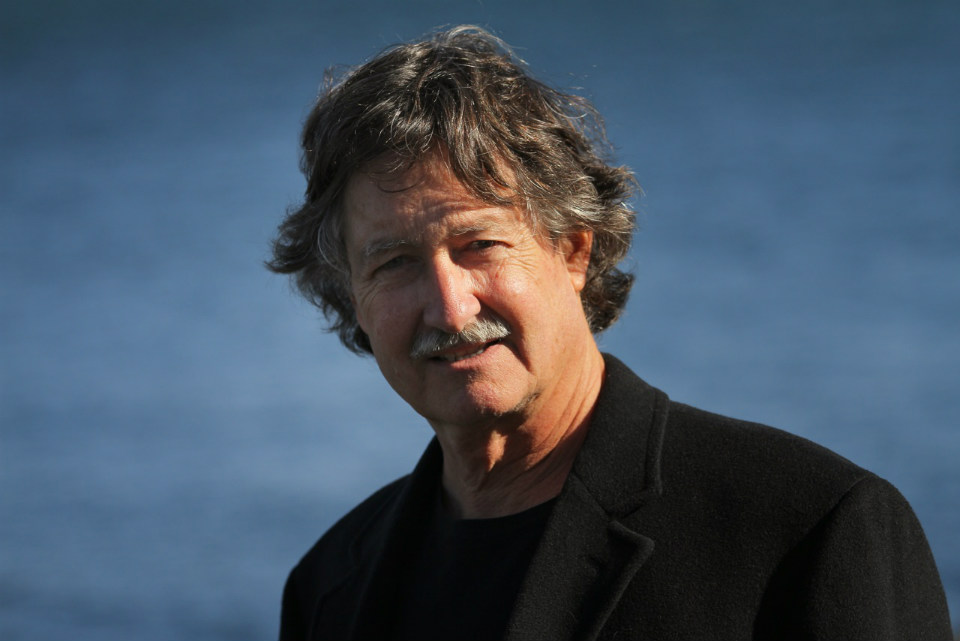
The author, Michael Wuitchik, is a retired psychologist who visited refugee camps during the war in Sierra Leone and who has returned many times. He lives on the west coast of Canada, near Victoria, British Columbia. He continues to commit his time to community aid projects in his adopted African village Sumbuya, Sierra Leone. He documents his time spent in Sierra Leone, and how it inspired his career in writing on his blog.

Posted in Literata, Miscellaneous | Tagged , , , , , | 6 Comments

Passion Play in the Serengeti

Two million animals in search of the tall grasses.

An endless circle, with no beginning

And no end.

Languid walks along the plains,

The sweet grasses disappearing within days of their coming,

The relentless movement of wildebeest

The life-force of the Serengeti.

A passion play of hunters and hunted,

Repeating through the millennia.

At the river they wait, balking at the sight of crocodiles and current

And the bodies of those that tried before them.

But the urge to cross becomes stronger than the fear.


It takes only one.


One leaping animal and hundreds follow,

Young calling their mothers,

Mothers headlong, there is no subtlety here,

No gentle nudges.

An endless, bleating, writhing, swarm.

Following. Always following.

Breaking legs. Forcing younger ones below the surface.

Some slipping on rocks. Others carried into the gaping maws

Of giant crocodiles.


And still they cross.

Until something even more remarkable happens.

Some of the lucky ones who have attained the other side,

Exhausted, limping, close to collapse,

Return.

Our guides tell us the wildebeest have small brains,

And so it seems.


First one, then a line of animals re crossing the river,

Through the same currents,

Across the same slippery rock gardens,

Into the jaws that missed the first time.

Why?

Some of the young get separated from their mothers.

And so they return. Searching. Calling.

Bringing with them the young and the old and mothers and calves.

Because it is in the nature of the wildebeest

To follow the tail in front of them.

Crossing as relentlessly as their hearts pump blood.

We asked ourselves,

What animal you would like to be?

What animal is closest to your own character?

A cheetah, says one. Giraffe says another.

No one chooses a wildebeest.

Posted in Miscellaneous, Tanzania 2012 | Tagged , , , , , | 4 Comments

Back to the beginning….

Thanks to my agent, Drea Cohane, My Heart Is Not My Own is finally getting into the hands of acquiring editors. And so my thoughts return to the beginning….

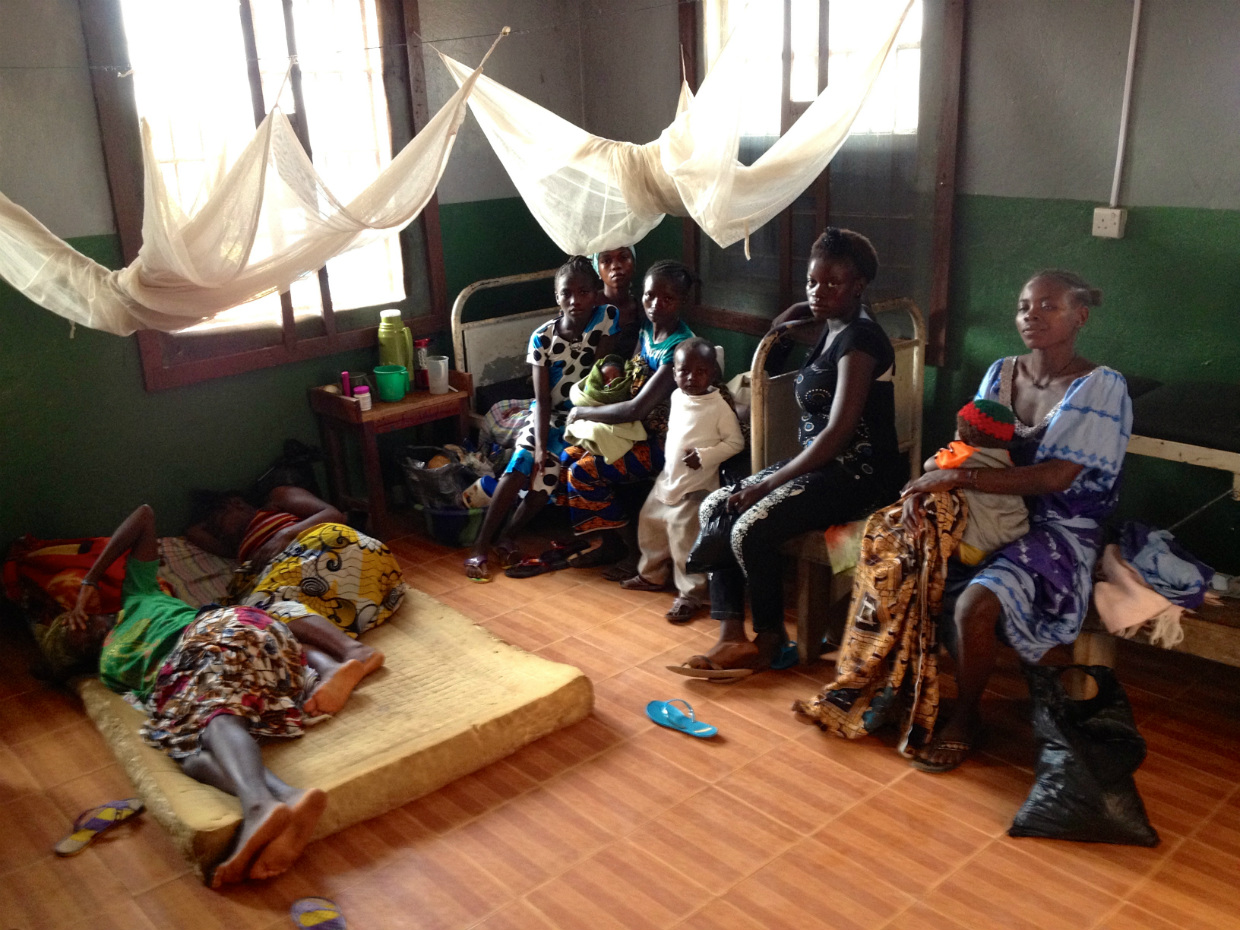
Connaught Hospital, Freetown

In 2000, during the civil war in Sierra Leone, I visited a refugee camp in Freetown. I remember several images from that trip, but one in particular, has stayed with me. A young woman, perhaps eighteen or nineteen, with stumps where her arms had been, standing alone in a hut. The rebels had taken her arms and raped her repeatedly. It was the vacant, almost catatonic look in her eyes—eyes I can still see, that inspired the Jolie character in My Heart Is Not My Own.


Eyes that inspired a novel.


Sierra remains a dangerous place for women of child-bearing age—the lifetime chances of dying in pregnancy or childbirth are one in eight. Despite the challenges of life there,

poster at Military Hospital

Sierra Leonean women are blessed with wonderful resilience. My friend Betty Tenga is typical. Betty is a Sierra Leonean nurse who, with her family, came to Canada as a refugee late in the year 2,000.

Miltary Hospital, Wilberforce, Freetown


I have a fictional scene in My Heart Is Not My Own that describes what might have happened at Connaught Hospital on the day the rebels were looting Freetown. On that particular day, Betty had more than thirty people taking shelter in her house. Betty lived quite the life—she actually met the notorious rebel leader, Masquita ,and she delivered babies on her parlour floor. Earlier she had confronted child-soldiers who were looking for her eldest son—she put them off, but knew they would be back. Eventually, Betty and her husband Jose made the painful choice to leave their neighbours and flee. Because she was an army nurse this meant going AWOL. Jose bundled Betty into a blanket, made it through army checkpoints and threw her onto a waiting helicopter. After spending two years as refugees in Cotes d’Ivoire they were brought to Canada by a Canadian NGO, CAUSE Canada.

Ward at Connaught Hospital, Freetown


Despite all of this one of the most touching scenes Betty ever described to me was her first day at work, as a nurse in Canmore, Alberta Canada. The technology in the hospital in this small town in Canada was overwhelming to her—and she went into the washroom and cried in frustration. This is the same woman who has delivered thousands of babies as a midwife, most of the deliveries conducted on her own.


Betty Tenga, with her mom Agnes, in Banff Alberta

I think Betty wants My Heart Is Not My Own to be published almost as much as I do. She helped me with plot and characters, suggested Mende and Krio phrases, provided the names of traditional herbs that my Mariama character used as medicines, and she checked my midwifery for the two childbirth scenes that appear in My Heart Is Not My Own. It goes without saying that this novel would not have been written, but for Betty Tenga.

Posted in Literata, Miscellaneous, Salone 2012 | Tagged , , , , , , , , , | 1 Comment